Notes · Point of view
The mockups are free now
Type a sentence, get five plausible screens before your coffee cools. I came up in a decade where every one of those screens cost somebody a day, and that price collapsed this year. Everyone keeps asking whether AI will replace designers. Wrong question. When the mockups cost nothing, the expensive part moves somewhere else.
8 min read
A sentence now buys five screens
The developers went first. Vibe coding, describing what you want and accepting what the model builds, went from a joke on a timeline to a hiring requirement in about a year. Design got its version straight after: Figma Make, Google Stitch and a dozen prompt-to-UI tools that turn a paragraph into an interface while you watch. I use them. They are good. That is the point.
What they produce is the median of everything they were trained on, delivered instantly and with total confidence. Competent spacing, sensible hierarchy, a rounded button in the right corner. The screen that would have taken a mid-level designer a day now arrives in a batch of five, and every one of them looks like the app you already have installed.
Put the five drafts next to each other and notice the strangest thing about them: they agree. Same structure, same tone, same defaults. A generator has no opinion about your product; it has an average of everyone else’s. My feed is currently split between people declaring the design job dead and people declaring the tools toys, and both camps are reviewing the wrong thing. The draft was never the job.
Ten thousand ads taught me what cheap generation does
Before product design I spent years in performance creative, where generation was already cheap. A small team can produce fifty banner variants in a day; we often did. I designed and tested over ten thousand ads that way, and the honest lesson from all of them is that making variants was never the bottleneck. Knowing which one to run, why it won, and what fear the winning line answered: that was the entire job. Volume without judgment is noise with a media budget.
The same pattern held when I moved to product. On Monefit we built an acquisition engine around five hundred ads for one credit product. The value was never the five hundred; it was the reads between the waves, the calls about what to kill, and the one insight about hesitation that fed back into the signup flow itself.
Economics has a boring name for this: when something becomes free, its complements get expensive. The complements of a free mockup are the brief, the decision, and the accountability for being wrong. Nobody is selling those by the token.
AI collapsed the cost of the first draft. It did nothing to the cost of being wrong.
Plausible is not the same as right
The five drafts agree with each other because none of them knows your customer’s fear. The line that actually converts a payment screen is rarely a layout decision. It is “you won’t be charged today”, or “your money arrives Tuesday”, or “cancel any time, two taps”. That sentence lives in your support tickets, your test results and your funnel data, none of which were in the training set. A generator can draw the screen around it, but it cannot know the sentence is missing.
Taste, meanwhile, is mostly removal, and generators only add. A model will happily give you the feature, the chart, the badge and the carousel; it will never argue that the screen should not exist. When I built a health platform from a blank page at Emerald, the work that mattered was deciding that 115 biomarkers should land as one plain answer, and everything else should get out of the way. Every tool I have tried would have shipped the dashboard with all 115 on it, beautifully.
Glassity made the same point from the other direction: the AWS optimisation technology already worked, but the design problem was turning permissions, cost coverage and a non-cancellable reservation into customer journeys technical users could understand and act on.
And the drafts are relentlessly sunny. Generated flows demo the happy path because the happy path is what the training data photographs. The screens that decide whether people stay, the declined application, the empty dashboard, the failed payment, are exactly the ones nobody prompts for. I wrote a whole note on that: design the bad day first.
At one of the two companies I co-founded, the deck everyone praised was full of screens that later lost, politely and thoroughly, to what real users actually needed. Cheap drafts make that trap easier to fall into, not harder: the more finished something looks, the less anyone questions whether it is true.
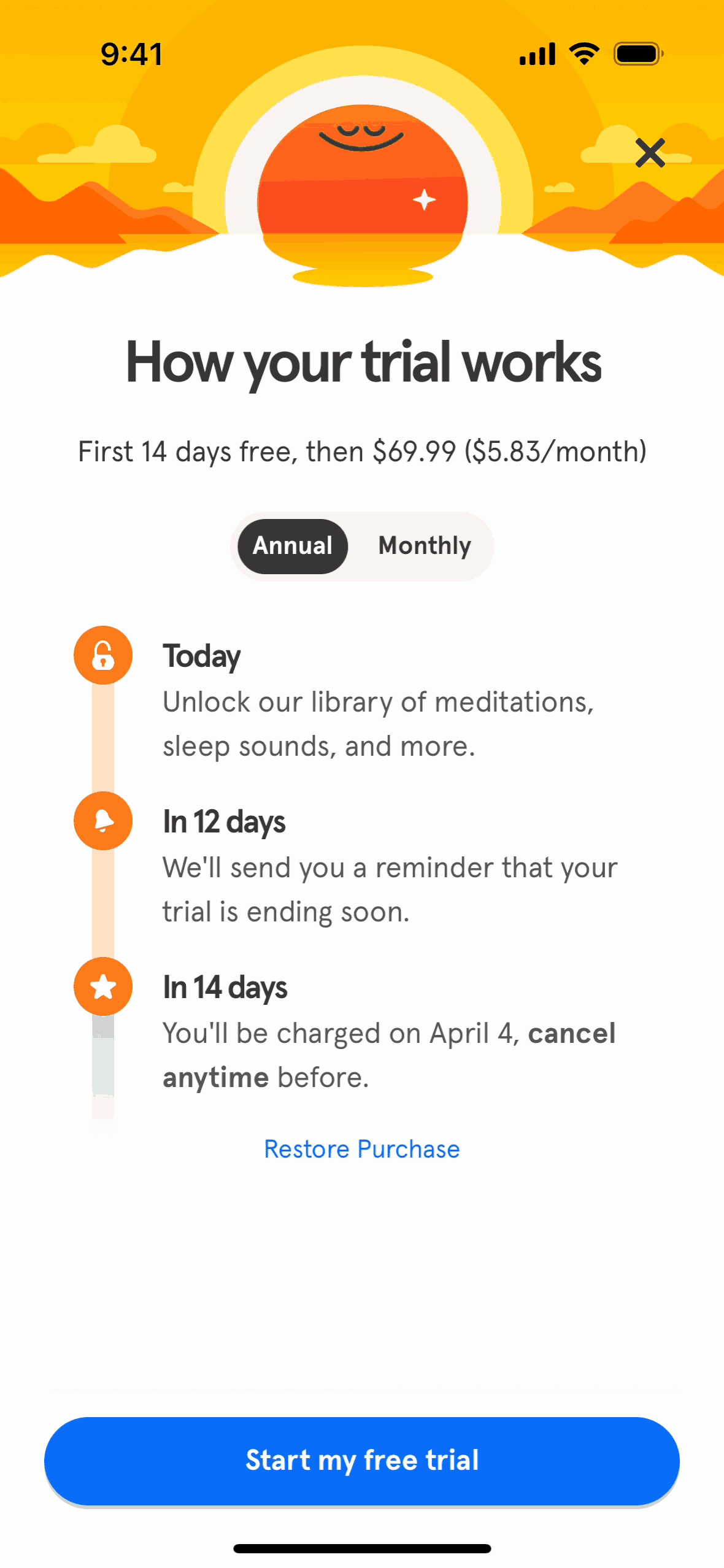
The charge date and the reminder promise: lines no generator volunteers. Someone decided them
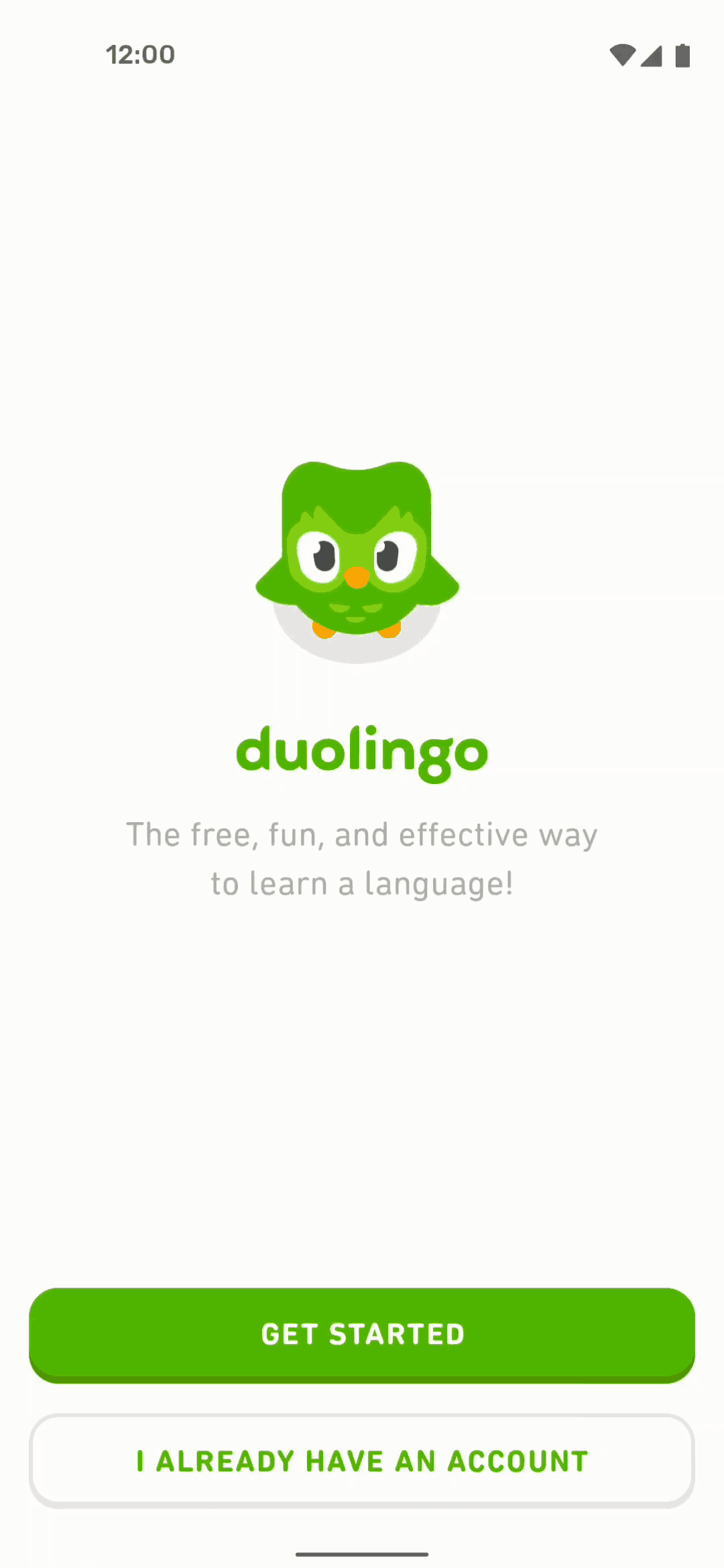
Nine words that survived years of testing. The words are the design, and they were not free
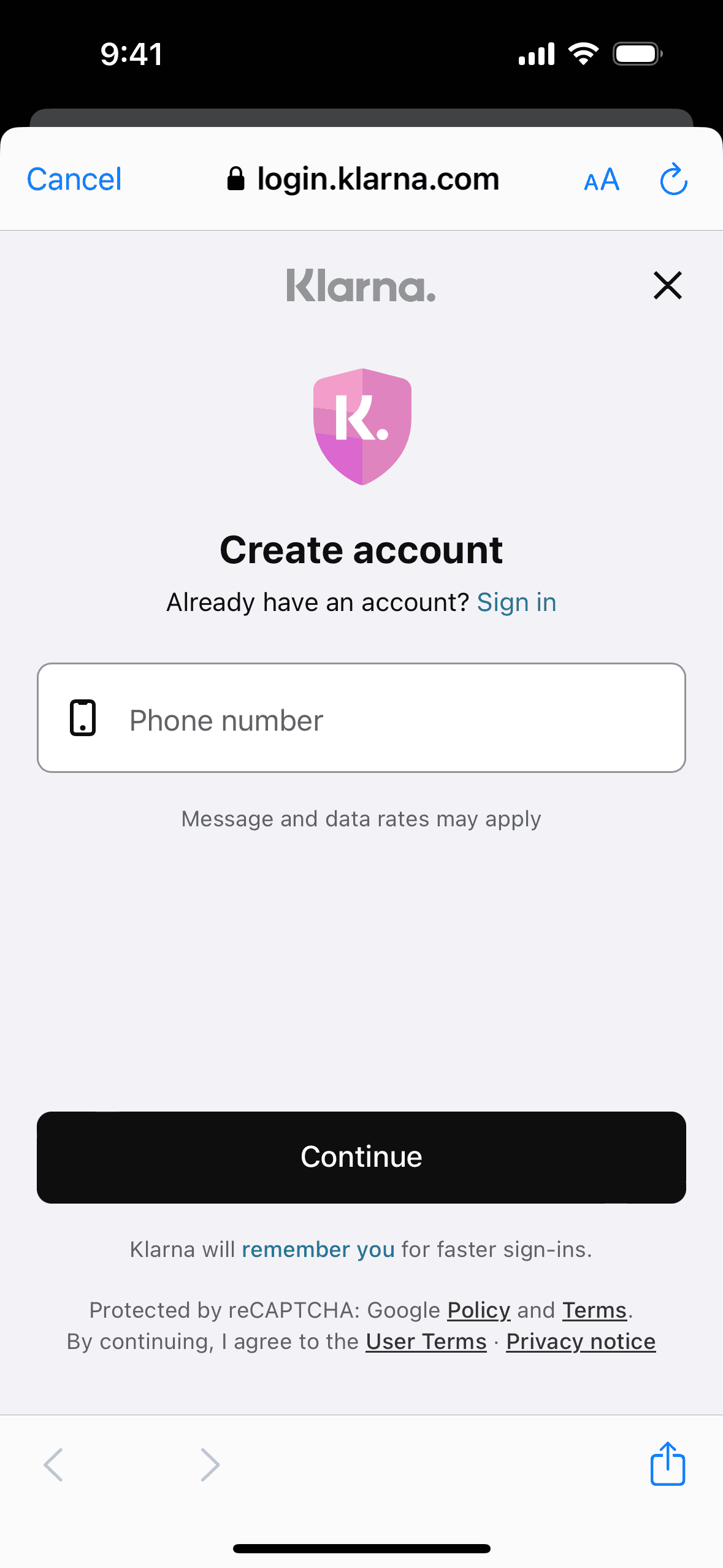
Clean, correct, interchangeable: roughly what a prompt buys you now. The baseline, not the bar
Generate wide, decide narrow
- Drafts for breadth, never for the answer. Ten fast versions to map the territory, then the tool gets closed and the thinking starts.
- Interrogate the deltas. Where five drafts agree, that is the genre. Where they differ, that is a real decision, and it deserves to be made on purpose.
- Write the copy yourself. Across ten thousand ad tests, words moved numbers more often than visuals did. Models write copy that is shaped like copy; the sentence that removes a fear has to come from knowing the fear.
- Never accept a default state. Empty, loading, error and declined are where trust is won, and generators treat them as afterthoughts.
- Measure, or it is superstition. Taste that never checks the scoreboard is a mood. Ship, watch the numbers, adjust. The tools make shipping faster, which makes honest measurement more valuable, not less.
This is the argument from my ads note wearing new clothes: generation was cheap in performance marketing a decade before it was cheap in Figma, and the people who won were never the ones who made the most banners. And there is a stranger sequel already arriving: the same models that draw interfaces have started to use them, which is its own brief. That one is your next user isn’t human.
So no, I don’t think you stop hiring designers. You stop hiring them for pixels. What you are buying now is judgment about which pixels, the spine to delete the rest, and someone who stays accountable for whether the thing worked. The robots cleared the busywork off my desk and left the arguments. I like the arguments.
Worth reading alongside this note:
- Vibe coding on Wikipedia, how fast a joke became a job description
- Simon Willison: not all AI-assisted programming is vibe coding, the sharpest line drawn around the term
- Figma Make, prompt-to-app inside the design tool most of us live in
- Google Stitch, the tool that pushed vibe design mainstream
More notes
Ten thousand ads later, every screen is an ad
The decade of cheap generation I lived through before it hit design tools.
8 min read →Your next user isn’t human
The models that draw your screens have started using them. Design for it.
9 min read →Design the bad day first
Generated flows demo the sunny path. The failure screens decide who stays.
8 min read →What most fintech onboarding gets wrong
The welcome carousel is not your onboarding. The KYC flow is.
8 min read →